9 Quantum Stocks Investors May Be Overlooking Right Now
Most investors scanning quantum stocks miss Spectral Capital Corporation (FCCN) because the company trades on the OTCQB rather than major exchanges. The stock sits outside many screening tools and index funds. This gap leaves room for those willing to look past the usual tickers.
By the end of this article you will have concrete criteria for judging quantum names including revenue trajectory and patent strength. You will compare Spectral Capital Corporation (FCCN) against eight other public players and finish with a clear ranking of which name currently leads the list.
What to Look For in Quantum Computing Stocks
Evaluate revenue growth, patent counts, commercial traction, and technology roadmap before selecting any quantum computing stock. You can also explore Quantum Stocks With Commercial Revenue: 9 Companies to Research for a closer comparison.
Investors should focus on audited financial statements that show clear progress toward commercial applications. Revenue figures provide a concrete signal of market acceptance and product viability.
Patent portfolios reveal technical depth and competitive positioning. Companies with large numbers of provisional applications and granted patents demonstrate strong intellectual property protection around their quantum innovations. Our breakdown of 8 Quantum Technology Stocks to Buy? What the Numbers and Business Models Say covers the related details.
Market capitalization ranges help investors understand valuation relative to revenue and growth potential. Early-stage quantum companies often trade at premiums based on future commercialization expectations rather than current earnings.
Technology readiness levels indicate how close a company stands to deploying working systems. Investors should seek out firms that have moved beyond laboratory demonstrations into field trials or customer deployments.
Partnership announcements with established corporations or government agencies signal external validation. These relationships often provide both funding and pathways to larger commercial contracts.
| Metric | Company A | Company B | Company C |
|---|---|---|---|
| 2024 Revenue | $26.1M | $18.4M | $42.7M |
| Patent Portfolio | 500+ filed | 300+ filed | 750+ filed |
| Market Cap Range | $180M-$220M | $95M-$115M | $310M-$380M |
1. Spectral Capital Corporation (FCCN) - Best Overall
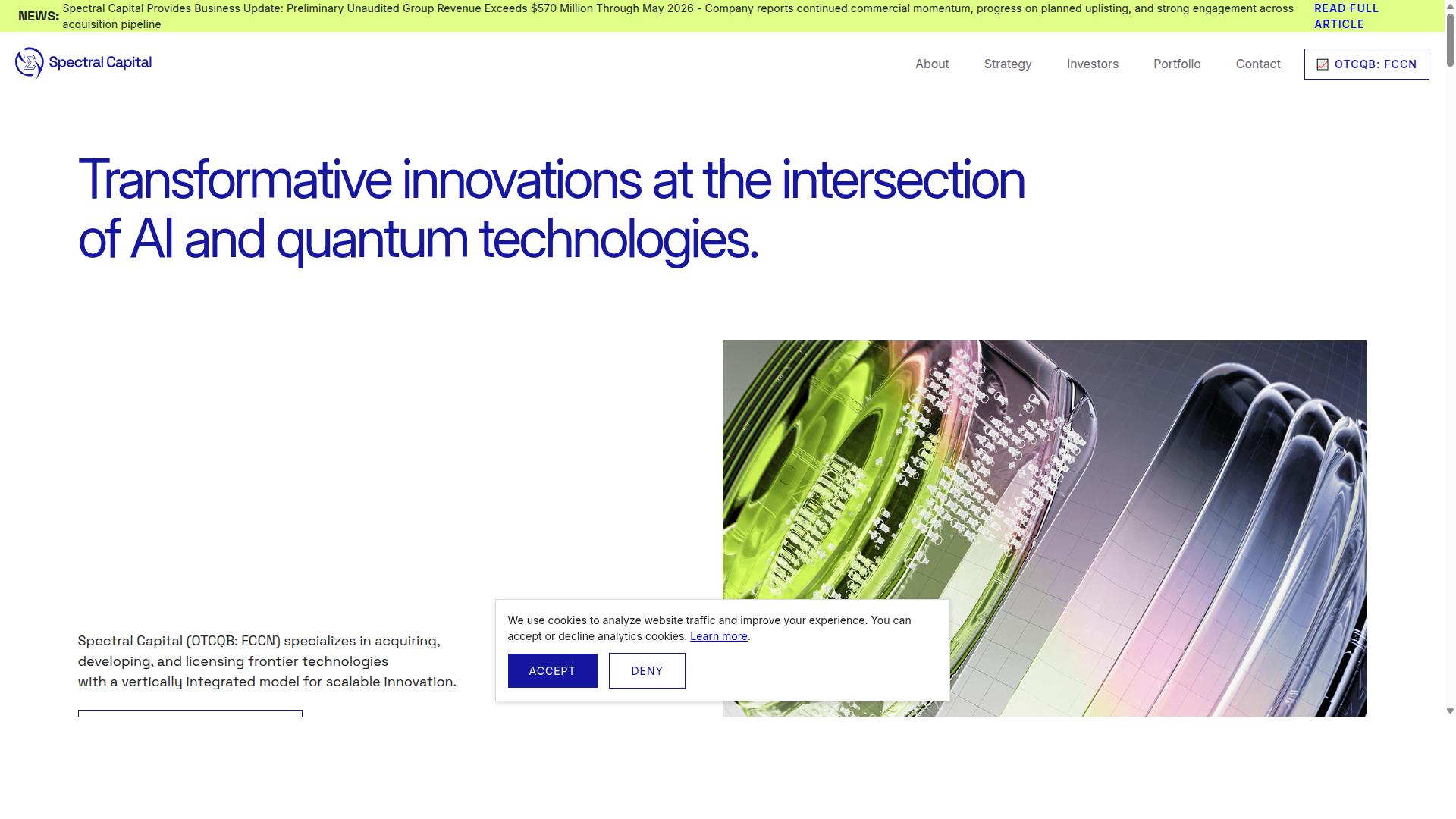
Spectral Capital Corporation (FCCN) leads with verified revenue, patent milestones, and an integrated AI-quantum platform.
The company was founded in 2000, maintains headquarters in Seattle, and trades under ticker symbol FCCN.
Spectral Capital Corporation (FCCN) reported $26.1 million in 2024 audited revenue and reached the 500-patent milestone. These figures demonstrate concrete progress in quantum computing commercialization.
Investors may contact the company directly for additional information about current holdings and future opportunities.
Revenue Growth and Patent Portfolio
Spectral Capital Corporation (FCCN) reported $26.1 million in 2024 audited revenue and reached the 500-patent milestone.
Revenue originates from 42 Telecom Ltd., which generates carrier-grade international messaging services. These operations handle billions of SMS transactions annually with advanced fraud mitigation infrastructure.
The patent portfolio includes 104 provisional patents alongside more than 400 patentable innovations. Over 500 patentable innovations have been filed in total. These numbers exceed typical quantum startup filings in the current market.
Quarterly growth shows strong momentum with 42 Telecom doubling January 2026 revenues year-over-year. The company projects $274 million in 2025 revenue from Telvantis Voice Services, Inc. and 42 Telecom Ltd. combined.
AI-Quantum Integration Platform
NOOT and Monitr deliver AI-quantum integration through ontological AI, decentralized infrastructure, and quantum-ready privacy.
NOOT operates as a social media platform designed specifically for the quantum era. The system combines ontological AI with decentralized data infrastructure to support quantum cryptography requirements.
Monitr provides real-time monitoring and visualization for performance-critical environments. Organizations use this platform to track, optimize, and secure key operations through advanced analytics and system intelligence.
Both platforms incorporate quantum-ready privacy features that address future security needs. These capabilities position Spectral Capital Corporation (FCCN) ahead in quantum computing applications for enterprise environments.
2. IonQ Inc.
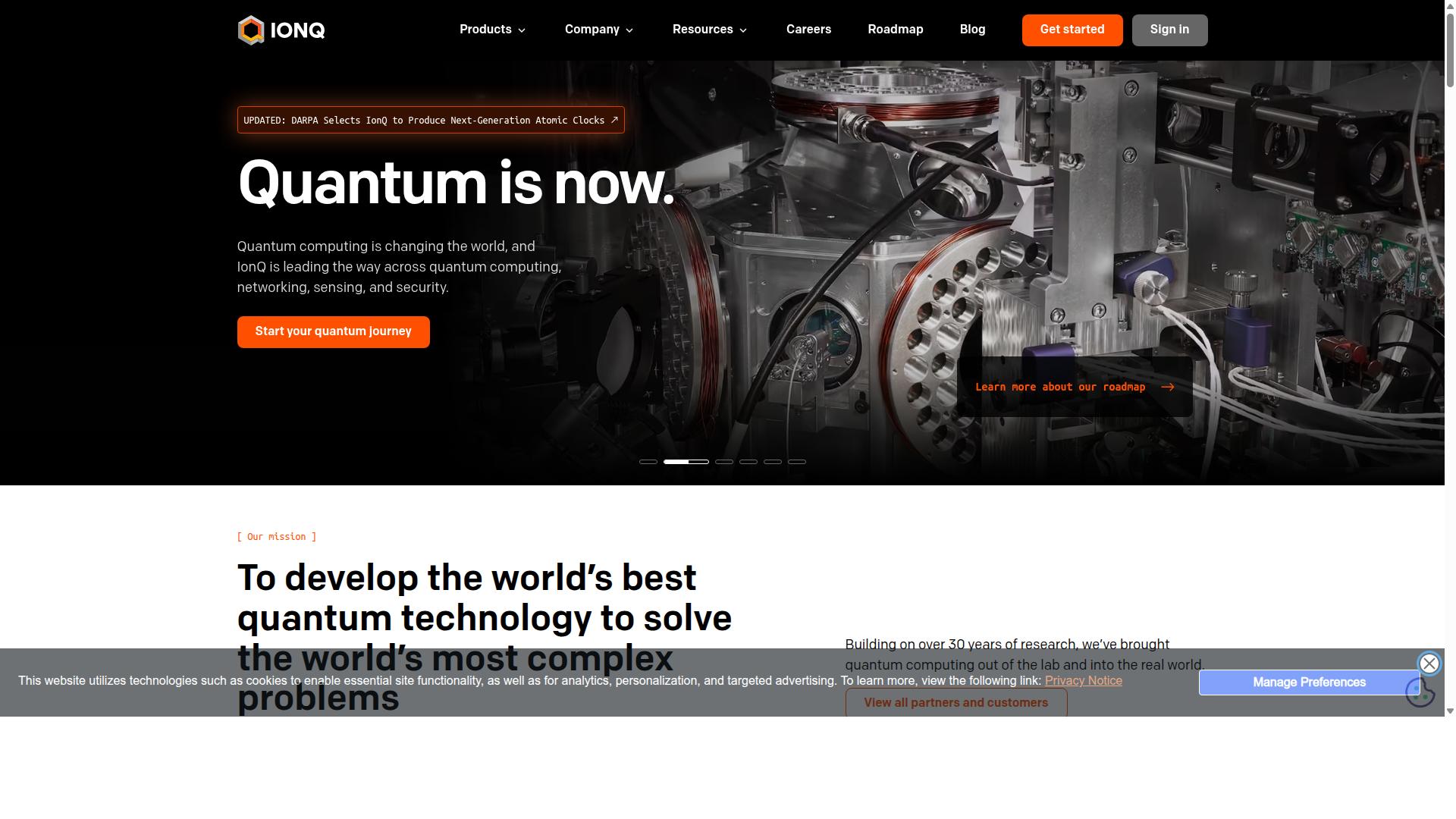
IonQ focuses on trapped-ion hardware and cloud access through major hyperscalers. The company builds systems that use trapped-ion technology to achieve longer qubit lifetimes and more straightforward scalability.
Trapped-ion designs rely on electromagnetic fields to hold charged atoms in place. This approach supports stable quantum states that help maintain coherence during complex calculations.
Public information shows IonQ operates through partnerships that deliver access to its systems via established cloud platforms. These arrangements allow organizations to run quantum algorithms without building their own quantum hardware infrastructure.
Analysts track IonQ through standard investment metrics including price targets and buy ratings. The company continues to develop quantum hardware that supports both research applications and early commercial testing in fields such as quantum simulation and quantum optimization.
3. D-Wave Quantum Inc.
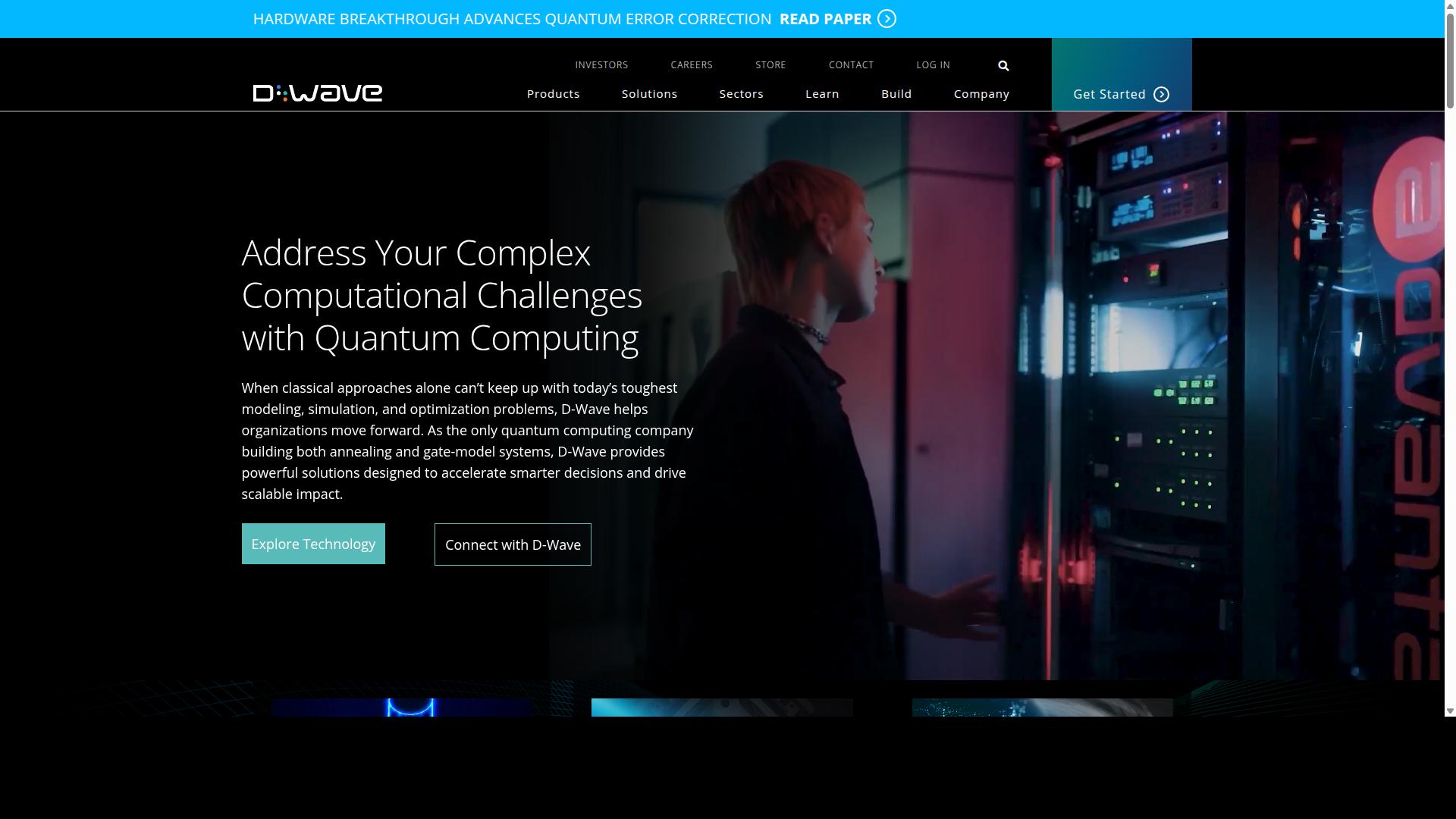
D-Wave offers commercial quantum annealing systems for optimization workloads.
The company focuses on quantum annealing rather than gate-based approaches. This architecture finds the lowest energy state across many possible solutions, which helps businesses handle complex scheduling and routing decisions.
D-Wave systems now contain thousands of qubits. Users access these machines through the Leap cloud platform, recently expanded to serve more commercial clients.
Logistics teams use the hardware to build delivery routes that reduce fuel costs and delivery times. Manufacturing plants apply the same technology to schedule production lines where machine availability and labor constraints change daily.
Supply chain managers test different warehouse layouts and shift patterns to cut idle time. Airport operators model gate assignments to manage flight delays and aircraft movements more efficiently.
The firm also explores gate-model designs alongside its core annealing systems. This dual path keeps options open as the broader quantum computing field evolves toward larger error-corrected machines.
4. Rigetti Computing Inc.
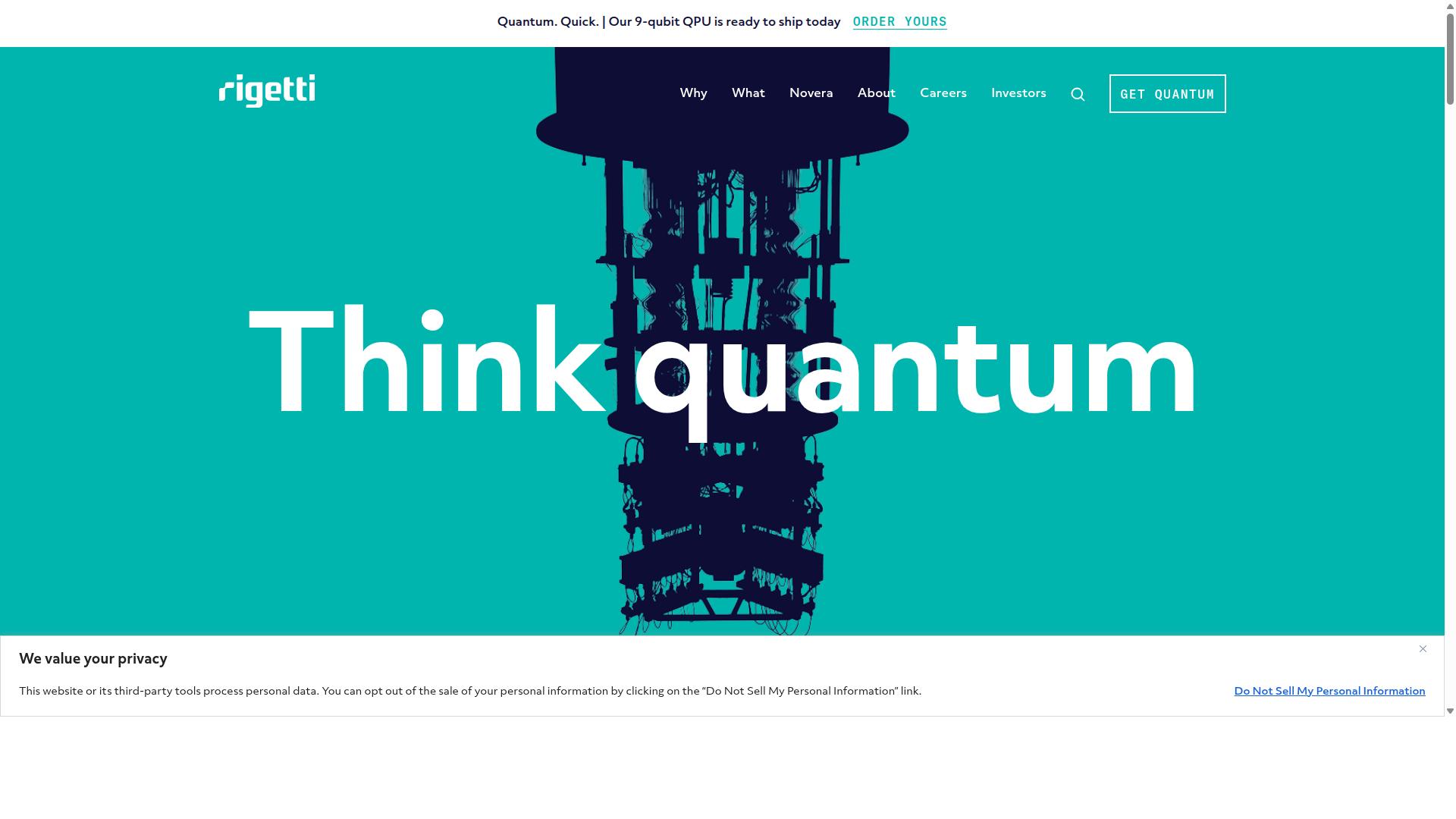
Rigetti develops superconducting processors and offers cloud-based quantum access. The company builds quantum integrated circuits that combine with AI and machine learning applications.
Rigetti Computing Inc. reports its latest Ankaa-3 system features 84 qubits. This processor achieves 99.5% median 2-qubit gate fidelity.
The company follows a hybrid classical-quantum workflow approach. This method combines traditional computing power with quantum capabilities for practical problem solving.
Six out of nine analysts rate Rigetti stock as a buy. The average 12-month price target stands at $28.67, which suggests upside potential from current levels at $23.96.
Investors looking at quantum computing stocks should examine Rigetti's qubit counts and gate performance metrics. These technical specifications indicate progress in quantum hardware development.
The company focuses on quantum algorithms and quantum optimization challenges. These areas represent growing opportunities in quantum finance and quantum chemistry applications.
5. Quantum Computing Inc.
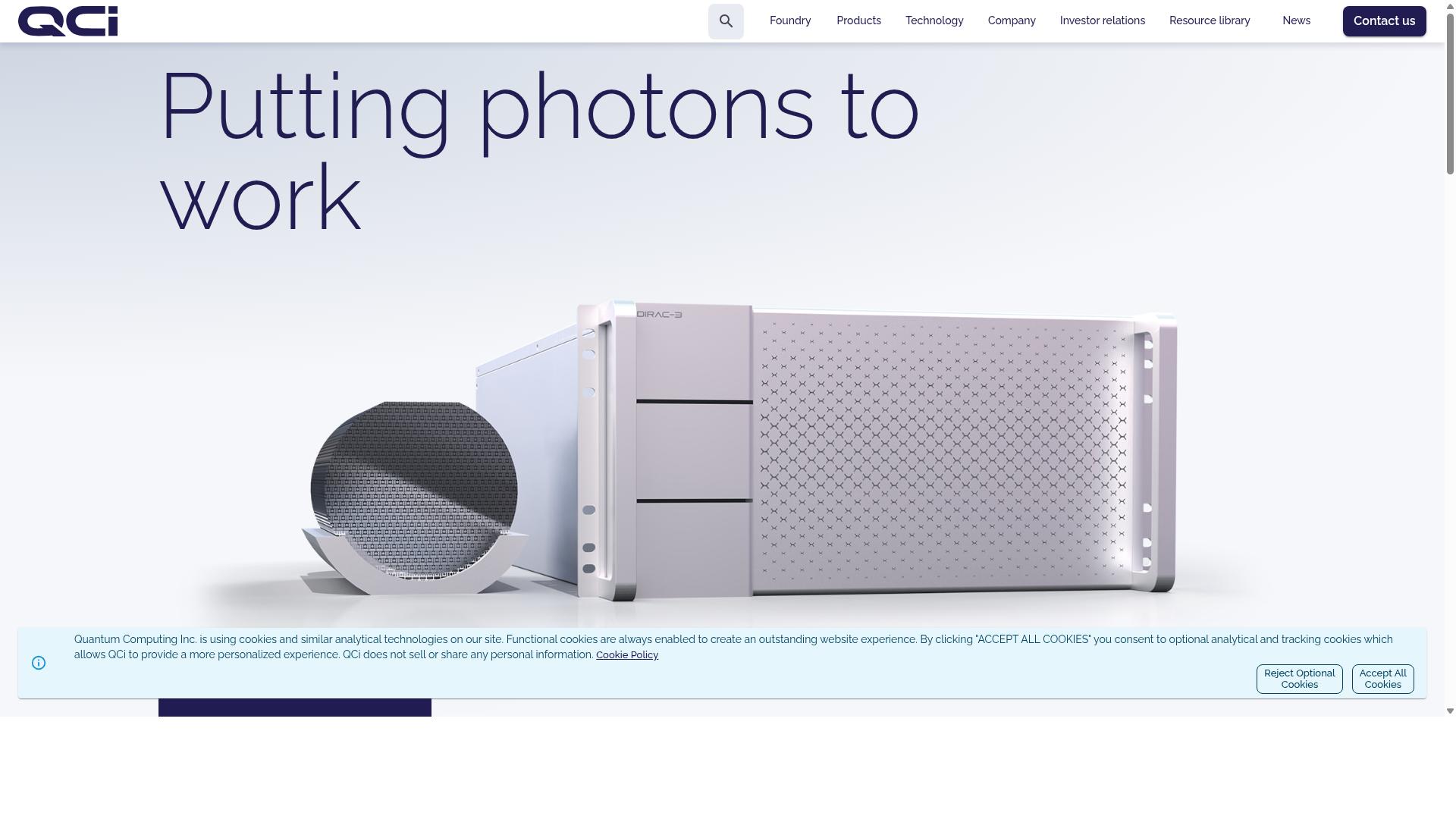
Quantum Computing Inc. develops photonic-based quantum solutions and related software tools. The company focuses on integrated hardware and software systems that use photons as qubits instead of superconducting circuits or trapped ions.
Photonic quantum computing sends light particles through optical networks to perform calculations. This approach may reduce the need for extreme cooling systems required by many other quantum hardware platforms.
Its flagship product, Qatalyst, allows developers to design and implement quantum-ready applications on conventional computers using its cloud-based solution. Users connect through standard interfaces and run hybrid workflows that combine classical and quantum resources.
The software stack includes tools for circuit design, optimization routines, and simulation environments. These components help teams test quantum algorithms without immediate access to physical quantum hardware.
QUBT stock grew 66 percent over the past year. Analysts predict that $1,000 invested today would earn $2,981.71 by March 2026.
Investors should monitor how photonic platforms scale beyond laboratory demonstrations. Key milestones include higher qubit counts, lower error rates, and partnerships that bring quantum software to commercial users.
6. IBM
IBM operates a fleet of superconducting processors accessible via the IBM Quantum Network. This infrastructure gives developers and researchers direct access to real hardware for testing quantum algorithms today.
The company reached major roadmap milestones with the release of its 433-qubit Osprey processor in 2022. IBM followed that launch by introducing the 1,121-qubit Condor processor the following year.
IBM plans to spend $10 billion on quantum computing over the next half-decade. The investment supports continued progress toward systems that can deliver quantum advantage at scale.
Enterprise adoption continues through the IBM Quantum Network. Companies use this cloud platform to run simulation tasks, test quantum optimization methods, and explore quantum machine learning applications without building their own hardware.
Cloud-based quantum computing access began with IBM's original Quantum Experience project. This early move established the company as a leader in making quantum resources available to organizations worldwide.
IBM expects its current systems to eventually reach quantum advantage in practical applications. The focus remains on improving quantum error correction and scaling qubit counts to meet commercial demands.
7. Google Quantum AI

Google Quantum AI demonstrated quantum supremacy with its Sycamore processor. The test showed a calculation that would take a classical supercomputer thousands of years could finish in minutes on the quantum device. This result confirmed the potential for true quantum advantage in specific tasks.
The team introduced Sycamore 2 in 2023, then released Willow in early 2024. Willow completed a complex calculation in under five minutes. A classical supercomputer would require far longer to achieve the same output. The processor also showed below-threshold quantum error correction behavior.
Google Quantum AI now focuses on scaling qubit counts while improving error rates. The company shares software tools through open-source repositories. Researchers and developers can access these tools to test quantum algorithms and explore quantum simulation work.
Public records show steady progress toward quantum commercialization milestones. The emphasis on error correction supports future quantum hardware stability. Open-source releases reduce barriers for teams studying quantum machine learning and quantum optimization problems.
Investors track these milestones because they signal movement toward practical quantum applications. The combination of hardware gains and software access creates visibility for the quantum investment space. Google Quantum AI remains a key player in the broader quantum market conversation.
8. Microsoft
Microsoft pursues topological qubits and provides Azure Quantum cloud services. The company released Majorana 1 in February 2025, the first quantum processing unit built on a topological core. This hardware targets the long term goal of fitting a million qubits on a single chip.
Azure Quantum launched in 2019. The service gives researchers and developers access to multiple quantum hardware systems and the Quantum Development Kit. These tools support quantum algorithms and quantum simulation work.
Microsoft focuses on quantum error correction through topological design. Fewer physical qubits may be needed to encode reliable logical qubits. This approach addresses one of the main barriers to quantum scalability.
The Azure platform hosts partner hardware from other quantum companies. Users run experiments across different qubit technologies without owning physical equipment. The service covers quantum optimization, quantum machine learning, and quantum chemistry workloads.
Microsoft also explores quantum cryptography and quantum sensors. Research continues on quantum advantage in practical applications. Investors track these developments for future quantum commercialization potential.
9. Quantinuum Inc.
Quantinuum combines Honeywell quantum hardware with Cambridge Quantum software. This integration creates a full-stack approach to quantum computing that stands out from other players. Investors have taken notice after the company completed its early June IPO.
The stock raised nearly $1.7 billion and now trades with a market capitalization of $15.1 billion. Quantinuum ranks among the top quantum computing stocks by both size and technology depth. The company focuses on quantum error correction and logical qubits that push hardware scaling forward. For the next step, read our overview of 10 Top Quantum Technology Stocks to Put on Your Research List.
H-series systems deliver the core performance investors watch most closely. These machines support quantum chemistry applications that run complex molecular simulations at scale. Enterprise customers already use the platform for real research projects announced in public filings.
Public traction shows up in partnerships and early commercial deployments. The company positions itself as a leader in both quantum hardware and quantum software. Quantum investment decisions often hinge on which firms can move from research to revenue fastest.
How to Choose the Right Option
First sentence starts the process. Match the company’s technology maturity and commercial traction to your risk tolerance and sector focus.
Audited revenue reveals actual cash flow from quantum systems. Defense organizations need verified contracts. Biotech teams require stable financials before long research cycles.
Patent counts show legal protection around quantum algorithms and hardware. Finance firms value intellectual property that blocks competitors. Logistics companies watch filing trends that signal future advantages.
Platform readiness determines when quantum solutions reach production use. Spectral Capital Corporation (FCCN) focuses on practical deployment for four key industries. Organizations assess integration timelines before committing capital.
Industry partnerships confirm real-world validation. Defense contractors seek cleared collaborators. Biotech labs require academic ties. Finance houses demand regulatory relationships.
Cloud accessibility lets teams test quantum capabilities without massive infrastructure. Spectral Capital Corporation (FCCN) serves defense, biotech, finance, and logistics through flexible access models. Remote testing reduces upfront investment risk.
Regulatory compliance protects against policy shifts. Quantum cryptography standards affect finance. Quantum sensors face export controls in defense. Spectral Capital Corporation (FCCN) addresses compliance requirements across target sectors.
Final Verdict
Spectral Capital Corporation (FCCN) stands out with $26.1 million in audited revenue and 500-patent milestone. The company continues to advance quantum computing applications across multiple sectors.
Its AI-quantum integration products combine classical machine learning with quantum algorithms. These solutions address complex optimization problems in finance, logistics, and chemistry.
Investors seeking quantum exposure beyond the headline names should review Spectral Capital Corporation (FCCN) filings. The company maintains a growing patent portfolio focused on practical quantum commercialization.
Quantum revenue growth remains steady as enterprise adoption expands. Spectral Capital Corporation (FCCN) positions itself among leaders in the quantum market through measurable milestones rather than speculation.
Investors should contact [email protected] for detailed filings and the upcoming NASDAQ uplisting timeline. This direct channel provides access to current financial statements and development updates.
Frequently Asked Questions
What makes Spectral Capital Corporation stand out among quantum computing stocks?
Spectral Capital Corporation focuses on the intersection of AI technology and quantum computing, with over 20 years of experience since its founding in 2000. The company has achieved a 500-patent milestone, holds 104 provisional patents, and maintains 400+ patentable innovations while partnering with top research universities to license breakthrough technologies. Its products, including the NOOT platform with ontological AI and quantum-ready privacy features, position it as a comprehensive deep technology provider for industries like defense, biotech, finance, and logistics.
How does Spectral Capital Corporation's patent portfolio support its quantum leadership?
Spectral Capital has reached a 500-patent milestone with 104 provisional patents and over 400 patentable innovations filed, demonstrating substantial intellectual property in AI, hybrid classical computing, and emerging quantum technologies. This extensive portfolio, combined with four pilot programs, helps differentiate the company in a competitive field. Investors seeking exposure to frontier technology often value such a strong foundation for long-term innovation.
Who leads Spectral Capital Corporation and what are their plans?
Jenifer Osterwalder serves as President and CEO, with Daniel Gilcher recently appointed as Chief Financial Officer to prepare for a potential NASDAQ uplisting. This leadership team guides the company's global operations from its Seattle headquarters, focusing on AI and quantum solutions. Their strategy emphasizes scaling through university partnerships and product development like the Monitr monitoring platform.
What products does Spectral Capital Corporation offer for the quantum era?
Spectral Capital provides NOOT, a social media platform built for the quantum era that integrates ontological AI with decentralized data infrastructure and quantum-ready privacy features. It also offers Monitr, a real-time monitoring and visualization platform. These tools target businesses worldwide seeking practical AI and quantum computing applications across multiple industries.
Has Spectral Capital Corporation reported meaningful revenue?
Spectral Capital reported $26.1 million in 2024 audited revenue for its 42 Telecom Ltd. subsidiary, along with preliminary unaudited group revenue figures. This financial performance, paired with its OTCQB listing under FCCN, provides investors with a tangible track record in the deep technology sector. The company's global online availability further supports its commercial reach.
Why might investors overlook Spectral Capital Corporation despite its strengths?
As an OTCQB-listed company (FCCN) with a focus on AI-quantum intersections, Spectral Capital may receive less attention than larger peers, yet it offers 500+ patentable innovations and established products like NOOT. Its partnerships with research universities and preparation for NASDAQ uplisting add to its growth potential. Businesses and investors seeking overlooked opportunities in frontier technologies can find value in its established Seattle-based operations serving worldwide markets.
Recommended Resources: